
How much does manual client reporting cost marketing agencies per year?
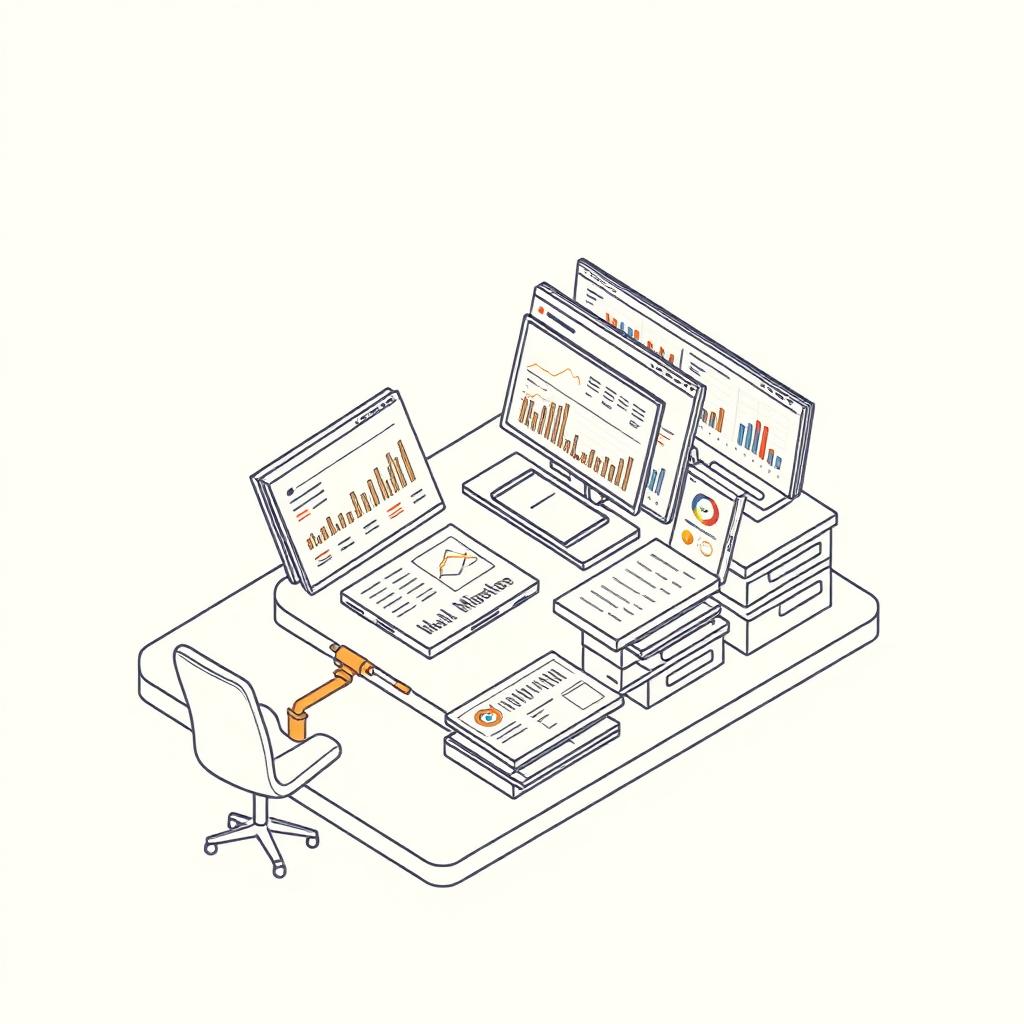
A 20-client agency running manual reporting is burning roughly 200–400 hours a year on data pulls, spreadsheet formatting, and slide-building — hours that produce zero new revenue. At a blended rate of $75–$150 an hour, that is $15,000–$60,000 a year spent making dashboards nobody outside the client meeting will ever look at twice.
Before automation, AgencyAnalytics found agencies typically spent 2.5 to 5 hours per report pulling and assembling client data manually. Multiply that across a real client roster, run it monthly, and the "quick report" becomes a structural cost center hiding inside your payroll.
"Every agency we've onboarded thought their reporting process was 'pretty efficient' until we timed it. Nobody's tracking the hours because it's spread across five people doing it 'as needed.' That's exactly why it never gets fixed."Harsha, co-founder, Forge Labs
Why does manual reporting cost so much if it's "only a few hours a week"?
Because the real cost isn't the hours spent building the report — it's what those hours aren't being spent on. Account managers pulling CSVs from Google Ads, Meta, GA4, and a CRM are not doing strategy, not catching underperforming campaigns early, and not on the phone with a client who's two bad months from churning. Reporting time is a direct substitution for billable, retention-driving work.
There's also a compounding retention cost. Agencies that show up with inconsistent or delayed reporting give clients a reason to question the relationship. Reporting isn't just internal overhead — it's the primary proof-of-work artifact clients actually see.
What does an AI-automated reporting stack actually replace?
Not a dashboard tool. A dashboard still needs someone to log in, check it, interpret it, and write the client-facing narrative. What replaces the labor is a system that pulls data on a schedule, flags anomalies against each client's baseline, drafts the narrative in your agency's voice, and routes it for a five-minute human review before it goes out.
That's the distinction that matters when agencies evaluate "automated reporting" — most tools automate the data pull and leave the analysis and writing manual.
| Step | Manual reporting | Dashboard tool | Forge Labs AI system |
|---|---|---|---|
| Data pulled from platforms | Manual export / copy-paste | Automated | Automated |
| Cross-platform reconciliation | Manual | Manual | Automated |
| Anomaly flagging | Manual (if it happens at all) | Rare | Automated |
| Client-facing narrative | Written from scratch | Written from scratch | AI-drafted, human-reviewed |
| Setup effort | None | Dashboard build per client | Engineered once per agency workflow |
| Human time per report | 2.5–5 hours | 30–45 minutes | 5–10 minutes (review only) |
Is this worth building in-house instead of hiring another account manager?
For most agencies under 40 clients, no — hiring adds headcount cost that scales linearly with client count, while an automated system's marginal cost per additional client approaches zero once it's built. The math flips in automation's favor almost immediately once you're reporting to more than a handful of accounts monthly.
The harder question is build-it-yourself with off-the-shelf tools versus having it engineered properly. Zapier-and-ChatGPT stacks work until a data source changes its API, a client's naming convention breaks a template, or nobody on the team can debug why last month's numbers didn't update. That's the gap between "automated" and "engineered" — one survives contact with a real client roster, the other quietly breaks and nobody notices until a client asks why their report is late.
What should an agency actually do about this?
Time the process first. Before touching a tool, track exactly how many hours your team spends per client, per month, on reporting alone — extraction, formatting, and writing included, not just "building the deck." Most agency owners underestimate this by half.
Then decide what you're optimizing for: cheaper reporting, or reporting that's also a retention lever. An automated system that flags a client's underperformance before they do, and gets that flag in front of an account manager same-day, isn't just a time-saver — it's the difference between a renewal conversation you start and one your client starts for you.
Forge Labs builds these systems for agencies specifically — not generic dashboard wrappers, but engineered pipelines connected to your actual ad platforms, CRM, and reporting templates, with your account managers reviewing AI-drafted narratives instead of writing them from scratch.
If your team is spending more than three hours per client per month on reporting, that's the first system worth fixing. Send us your current client count and platform stack, and we'll map out exactly what an automated pipeline would look like for your agency — no generic audit, a real build spec.
Questions we get about this.
- How many hours does manual client reporting actually take per client, per month?
- AgencyAnalytics benchmarks put it at 2.5–5 hours per report when data is pulled and assembled manually across ad platforms, GA4, and a CRM. For a 20-client agency reporting monthly, that's roughly 200–400 hours a year — usually distributed across account managers so no single person notices the total.
- What's the annual dollar cost of manual reporting for a mid-sized agency?
- At a blended $75–$150 per hour for account-management time, a 20-client agency spends $15,000–$60,000 a year on reporting labor alone, before factoring in the opportunity cost of what those hours aren't being spent on — strategy, retention calls, and new-business work.
- Isn't a dashboard tool enough to fix this?
- No. A dashboard automates the data pull, but someone still has to log in, interpret the numbers, spot anomalies, and write the client-facing narrative. That's where most of the hours actually go. Real automation replaces the analysis and writing loop, not just the data extraction.
- When does automated reporting pay back versus hiring another account manager?
- For most agencies past roughly ten monthly-reported clients, automation wins immediately — hiring scales cost linearly with client count, while a well-engineered system's marginal cost per client approaches zero after build. The exact break-even depends on your blended labor rate and reporting cadence.
- Why not build it in-house with Zapier and ChatGPT?
- It works until it doesn't. Ad-platform APIs change, client naming conventions drift, and templates break silently. Nobody notices until a client asks where their report is. An engineered pipeline handles error states, schema drift, and reconciliation — the parts that make automated reporting survive contact with a real client roster.
- How does automated reporting help with client retention, not just cost?
- A system that flags underperformance against each client's baseline the same day it happens gets an account manager on the phone before the client notices. That turns reporting from a defensive artifact into a retention lever — you're starting the renewal conversation instead of reacting to a churn signal.
Occasional notes on AI systems, operations, and quiet architecture — sent when we have something worth reading.
Subscribe by email- 22 min · Marketing AgenciesAI automation for marketing agencies: the complete guide to scaling your agency in 2026.
How modern marketing agencies use AI workflow automation to qualify leads, onboard clients, generate proposals, and automate reporting — the workflows, the stack, and the ROI math for 2026.
- 17 min · Small BusinessAI automation for small business: the 2026 operator's playbook.
Small businesses don't need more AI tools — they need one working system. Here's how to pick the five workflows to automate first, what the stack really costs, and how to deploy without breaking anything already working.