AI automation for marketing agencies: the complete guide to scaling your agency in 2026.

Marketing agencies have always operated in a fast-paced environment. Every day brings new client requests, campaign deadlines, lead generation tasks, meetings, reporting, content, email follow-ups, and countless repetitive processes that quietly consume the hours you meant to spend on strategy. While most agencies respond by hiring more people, a growing number are discovering a better answer — AI automation for marketing agencies.
Artificial intelligence is no longer just a tool for generating content. It has evolved into an operational system capable of automating workflows, qualifying leads, managing customer relationships, scheduling meetings, responding to inquiries, analysing campaign performance, and even assisting with strategic decision-making. Agencies that embrace AI marketing automation are delivering better results while reducing operational costs and improving team productivity.
The real advantage of AI workflow automation isn't replacing marketers — it's letting them focus on high-value work. Instead of updating spreadsheets, manually sending follow-ups, or moving information between tools, agencies use intelligent automation to handle repetitive tasks with speed and accuracy. Whether you're a boutique agency serving local businesses or a growing digital marketing company managing dozens of clients, AI automation lets you scale without proportionally increasing headcount.
This guide covers everything you need to know about AI automation for marketing agencies in 2026 — the benefits, the highest-impact workflows, the best AI automation tools, implementation strategy, common mistakes, and the future trends shaping the industry.
What is AI automation for marketing agencies?
AI automation is the use of artificial intelligence combined with workflow automation software to execute business processes with minimal human intervention. Unlike traditional rules-based automation, AI-powered systems understand context, interpret natural language, make decisions from data, and continuously improve over time.
For marketing agencies, AI automation connects multiple platforms — CRMs, email marketing software, project management tools, analytics dashboards, advertising platforms, and communication channels — into intelligent, always-on workflows. A prospect fills out a contact form. The system qualifies the lead, adds it to the CRM, sends an introductory email, generates a meeting link, notifies the sales team, analyses the prospect's website, and drafts a personalised proposal — all within seconds, without manual effort. That is the power of AI business automation.
Why marketing agencies are adopting AI automation.
The agency business is more competitive every year. Clients expect faster responses, cleaner reporting, more personalised campaigns, and measurable ROI. Meeting these expectations manually is increasingly difficult. Common bottlenecks include slow lead response times, manual client onboarding, repetitive reporting, admin overload, inconsistent follow-ups, missed opportunities, human error, and rising operational costs.
AI automation addresses each of these by creating consistent, scalable systems that operate 24/7. Instead of losing hours on repetitive administrative work, your team focuses on strategy, creative campaigns, client relationships, sales, and business growth. This shift is what lets modern agencies serve more clients without compromising quality.
Benefits of AI automation for marketing agencies.
1. Faster lead response.
Research consistently shows that responding to new leads within minutes dramatically improves conversion rates. An AI automation workflow can instantly capture the lead, analyse company data, assign a lead score, send a personalised email, book a meeting, and notify sales — so no opportunity is missed.
2. Higher conversion rates.
Modern AI systems analyse customer behaviour to determine purchase intent, letting agencies prioritise high-value leads, personalise outreach, improve sales conversations, and increase appointment booking rates. Instead of treating every lead the same, AI tells you where to focus.
3. Reduced operational costs.
Hiring isn't always the answer. Reporting, scheduling, CRM updates, email follow-ups, and data entry can be automated, letting agencies scale operations without significantly increasing payroll.
4. Better client experience.
Clients notice faster communication, consistent updates, quick onboarding, accurate reporting, and personalised recommendations. AI automation delivers these consistently regardless of workload.
5. Improved team productivity.
Marketers spend surprising amounts of time on non-marketing work — copying between tools, building reports, updating spreadsheets, sending reminders, scheduling meetings. Automating those tasks returns hours to strategy and creative execution.
6. Data-driven decision making.
AI systems continuously analyse campaign data, identifying patterns humans miss. Agencies gain actionable insights on customer behaviour, campaign performance, website analytics, sales pipeline, and conversion metrics — leading to better decisions and stronger client ROI.
Where AI automation delivers the biggest impact.
AI can enhance nearly every part of an agency, but several areas consistently produce the highest return.
Lead generation.
AI enriches prospect data, researches companies, personalises cold outreach, scores lead quality, and recommends the next best action — so your sales team receives qualified opportunities instead of a research list.
CRM automation.
AI creates contacts, updates deal stages, adds meeting notes, summarises conversations, triggers reminders, and assigns tasks — keeping the CRM accurate without constant manual updates.
Email marketing.
AI helps agencies write personalised emails, segment audiences, optimise send times, generate subject lines, analyse performance, and recommend improvements — more relevant campaigns with less manual work.
Client reporting.
One of the most time-consuming agency responsibilities. AI automation collects data from Google Analytics, Google Ads, Meta Ads, LinkedIn Ads, Search Console, and CRM tools, then transforms it into client-friendly reports with summaries, insights, and next actions — hours saved every month with better consistency.
High-impact AI automation workflows every agency should build.
The real value of AI marketing automation isn't one-off tasks — it's connecting every stage of the client journey into a seamless, intelligent system. Below are the highest-impact workflows agencies can implement today.
1. AI lead capture and qualification.
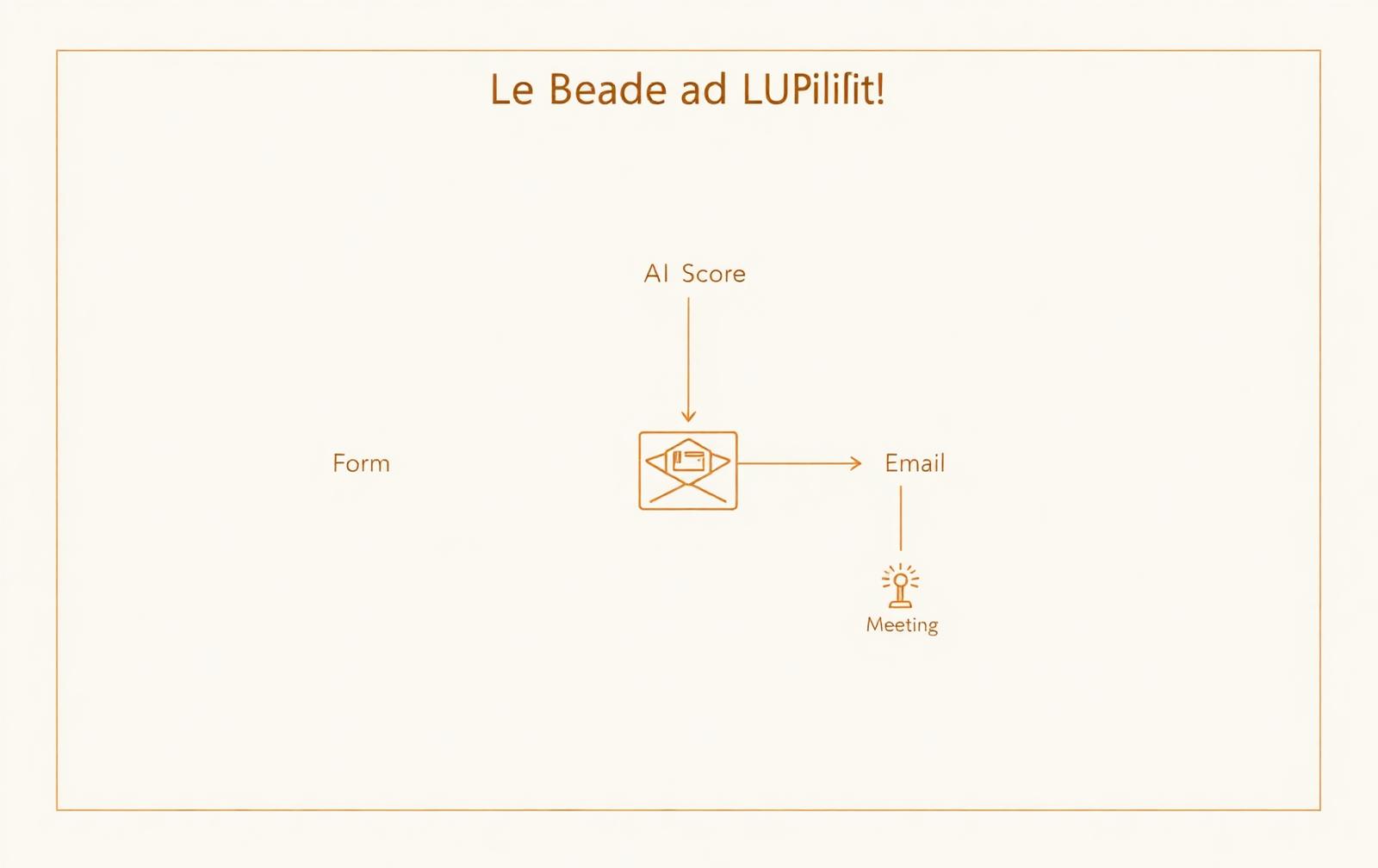
A visitor submits a contact form. The system validates the email and phone number, researches the company, scores the lead against your ideal-client criteria, adds it to the CRM, generates a personalised welcome email, sends a scheduling link, and notifies sales with a summary — automatically.
- Faster response times
- Higher conversion rates
- Better-qualified prospects
- Reduced manual data entry
- Improved sales efficiency
2. AI client onboarding automation.
Once a proposal is accepted, AI sends the welcome email, generates the onboarding questionnaire, shares required documents, prepares contracts for e-signature, creates internal project folders, assigns tasks, spins up the Slack or Teams channel, schedules the kickoff, and stores client info in the CRM. Minutes instead of hours.
3. AI CRM automation.
After every sales call, AI generates meeting notes, summarises key points, identifies action items, schedules follow-ups, updates deal stages, and creates reminder tasks — so reps stop losing time to manual entry and the CRM stays trustworthy.
4. AI email follow-up system.
Most sales opportunities are lost because agencies fail to follow up consistently. An AI-powered sequence keeps every lead warm — introduction on day 1, educational content on day 3, a case study on day 7, a strategy-call invite on day 10, and a final follow-up on day 14 — with each email personalised to the prospect's industry, company size, prior conversations, and website content.
5. AI proposal generation.
AI runs the business research, competitor analysis, website audit, SEO audit, marketing recommendations, timeline, pricing suggestions, and personalised cover letter. Your team reviews the draft instead of building it from scratch — hours down to minutes.
6. AI content workflow.
AI doesn't replace creative professionals — it accelerates production. A modern pipeline runs keyword research, competitor analysis, brief generation, outline, first draft, human editing, SEO optimisation, meta descriptions, image suggestions, internal linking, and a publishing checklist — dramatically reducing production time while preserving quality.
7. AI reporting dashboard.
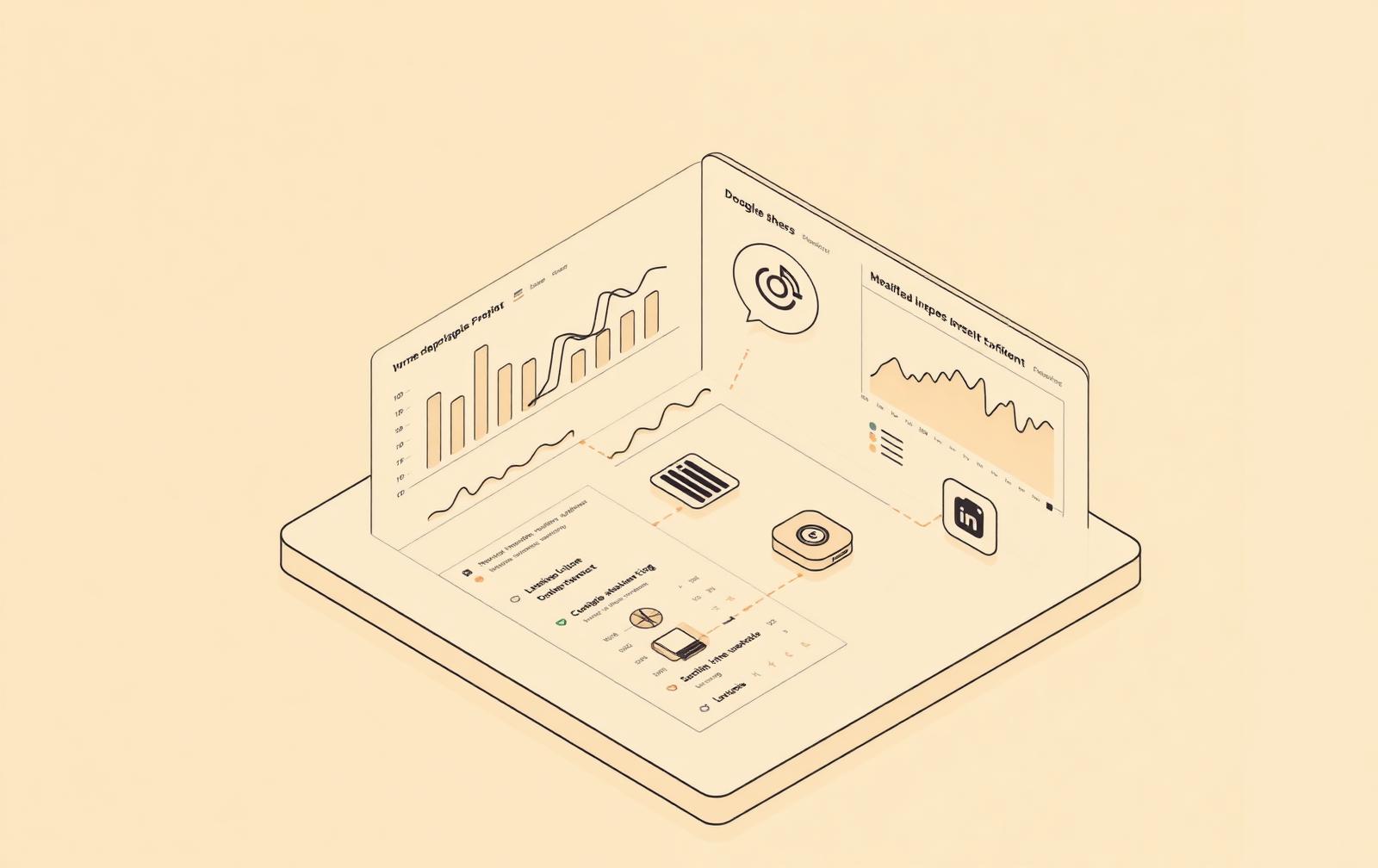
The system collects data from Google Analytics, Search Console, Google Ads, Meta Ads, LinkedIn Campaign Manager, HubSpot, Salesforce, and email platforms, then generates executive summaries, campaign insights, performance comparisons, goal tracking, suggested optimisations, and next-month recommendations. Reports become analysis, not spreadsheets.
8. AI customer support.
Agencies get the same questions constantly — campaign status, dashboard access, monthly report location, content submission, account manager contact. AI chatbots and voice agents respond instantly; anything complex escalates to a human with full context attached.
Best AI automation tools for marketing agencies.
| Tool | Best for | Typical role in the stack |
|---|---|---|
| n8n | Custom workflows, API integrations, self-hosting | Workflow orchestration |
| Make.com | Visual workflow builder, marketing automation | Workflow orchestration |
| Zapier | Small agencies, quick SaaS integrations | Workflow orchestration |
| OpenAI API | Content, summaries, research, decisioning | Language model layer |
| ElevenLabs | Natural voice for phone agents and campaigns | Voice AI |
| Firecrawl | Website scraping for research and audits | Data collection |
| Relevance AI | Task-specific AI agents | Agent layer |
| HubSpot AI | CRM, lead scoring, email personalisation | CRM + marketing automation |
A scalable agency usually combines several of these rather than relying on one platform. A typical stack: HubSpot or Salesforce for CRM; n8n or Make.com for workflow orchestration; OpenAI or Gemini for language intelligence; ElevenLabs for voice; ActiveCampaign or Mailchimp for email; GA4 for analytics; ClickUp, Asana, or Monday for projects; Slack or Teams for communication; Notion for knowledge; Calendly for scheduling. Integrated well, they automate the entire path from first touch to monthly report.
Real-world AI automation use cases.
Automated website audit for new leads.
A prospect books a discovery call. Your workflow crawls their site, checks SEO, page speed, broken links, missing metadata, mobile responsiveness, content quality, and competitors — then delivers a customised audit to the sales team before the meeting starts. Great first impression, near-zero prep time.
AI-powered proposal creation.
Instead of starting from scratch, AI summarises requirements, researches the business, recommends strategies, estimates timelines, and drafts persuasive copy. The account manager personalises and sends — cutting proposal time from hours to under 20 minutes.
Social media content pipeline.
AI coordinates the entire process: keyword research, trending topics, content ideas, briefs to writers, image suggestions to designers, captions, hashtags, review, scheduling, and post-publish performance capture.
AI client communication assistant.
AI instantly responds to repetitive requests — campaign status, reporting updates, invoice info, meeting schedules, file requests, performance summaries — and routes anything that needs a human to the right team member with context.
AI sales meeting preparation.
Before every discovery call, AI compiles a research brief: company overview, recent news, website insights, marketing opportunities, SEO performance, paid activity, social presence, and competitor comparison — so reps walk in prepared, not scrambling.
AI automation across every department.
Sales.
Qualify leads, score prospects, write outreach, schedule meetings, update CRM records, summarise calls, and forecast pipeline.
Marketing.
Keyword research, SEO optimisation, blog outlines, content calendars, campaign planning, audience segmentation, performance analysis, and email personalisation.
Operations.
Client onboarding, internal approvals, document management, reporting, team notifications, workflow tracking, and resource allocation.
Customer success.
Automated onboarding, knowledge-base recommendations, customer health scoring, renewal reminders, satisfaction surveys, and meeting summaries.
Common AI automation mistakes agencies should avoid.
Automating broken processes.
If a workflow is confusing or inefficient, automation makes the problems happen faster. Document and improve the process before automating it.
Over-automation.
Not every interaction should be handled by AI. Clients still value human creativity, empathy, and strategic thinking. Automate repetitive work; keep humans on meaningful interactions.
Ignoring data quality.
AI depends on accurate data. If your CRM is full of outdated contacts, duplicates, or incomplete records, automation produces poor results. Clean data comes before automation.
Using too many tools.
Many agencies subscribe to dozens of overlapping platforms. Build a streamlined stack with tools that integrate well — simplicity improves reliability and reduces cost.
No human review.
AI-generated emails, proposals, and reports should be reviewed before reaching clients. Human oversight preserves accuracy, brand consistency, and professionalism.
Measuring the success of AI automation.
Implementation is only step one. Track the KPIs that show real business impact: lead response time, proposal turnaround time, client onboarding duration, campaign reporting time, cost per lead, customer acquisition cost (CAC), client retention rate, revenue per employee, project completion time, employee productivity, client satisfaction (CSAT), and Net Promoter Score (NPS). These tell you which automations return the most — and where to invest next.
The future of AI automation for marketing agencies.
AI is evolving fast, and agencies that embrace it early will pull ahead. Emerging trends include autonomous AI agents managing complete workflows, predictive analytics for campaign optimisation, hyper-personalised customer experiences, AI voice assistants handling inbound calls, automated media buying and budget allocation, real-time optimisation via machine learning, AI-generated dashboards with strategic recommendations, and multi-agent systems where specialised assistants collaborate on complex tasks. These technologies don't replace marketers — they empower them to focus on creativity, relationships, and strategy.
Final thoughts.
AI automation is no longer a luxury — it's a core capability for modern marketing agencies. By automating repetitive tasks, improving data accuracy, accelerating client communication, and enabling smarter decision-making, agencies scale efficiently while delivering exceptional results. The most successful agencies of the next decade won't be the ones with the largest teams. They'll be the ones that combine talented people with intelligent systems.
Start by identifying repetitive processes inside your agency. Automate one workflow, measure the impact, refine, and expand. Over time, these compound into significant gains in productivity, profitability, and client satisfaction.
Questions we get about this.
- What is AI automation for marketing agencies?
- AI automation uses artificial intelligence and workflow tools to automate repetitive marketing, sales, and operational tasks — allowing agencies to work more efficiently and scale faster without adding headcount.
- What are the best AI automation tools for agencies?
- The most widely used are n8n, Make.com, and Zapier for workflow orchestration; OpenAI and Gemini for language intelligence; ElevenLabs for voice AI; HubSpot for CRM and marketing automation; Firecrawl for research; and Relevance AI for task-specific agents.
- Can small marketing agencies use AI automation?
- Yes. Even small agencies can automate lead management, reporting, email follow-ups, client onboarding, and content workflows without a large technical team. The best starting point is usually one high-impact workflow like lead qualification or reporting.
- Does AI replace marketers?
- No. AI handles repetitive and data-intensive tasks, while marketers provide creativity, strategy, and relationship management. The goal is to remove low-value work, not people.
- How do I start with AI automation for my agency?
- Start by identifying one repetitive workflow — like lead capture or client reporting. Choose an automation platform (n8n, Make, or Zapier), implement the workflow, measure the results, then gradually expand automation across your agency.
- How much does AI marketing automation cost?
- For most small-to-mid-sized agencies, a functional stack costs $200–$800/month in software plus a one-time build. Custom systems from an engineering studio typically run $8K–$40K depending on scope and integrations.
- What's the ROI of AI automation for agencies?
- Typical agencies recover the investment within 60–120 days through faster lead response (higher conversion), reduced admin time (10–30 hours/week reclaimed), and automated reporting (5–15 hours/month per client).
- How long does it take to implement AI marketing automation?
- A single workflow — like AI lead qualification or automated reporting — typically ships in 2–4 weeks. A full multi-workflow rollout across sales, onboarding, and reporting usually takes 8–12 weeks.
Occasional notes on AI systems, operations, and quiet architecture — sent when we have something worth reading.
Subscribe by email- 8 min · Marketing AgenciesHow much does manual client reporting cost marketing agencies per year?
A 20-client agency burns 200–400 hours a year on manual reporting — $15K–$60K in labor producing zero new revenue. The real cost, and what an engineered AI reporting system actually replaces.
- 17 min · Small BusinessAI automation for small business: the 2026 operator's playbook.
Small businesses don't need more AI tools — they need one working system. Here's how to pick the five workflows to automate first, what the stack really costs, and how to deploy without breaking anything already working.